Choosing a countertop pizza oven
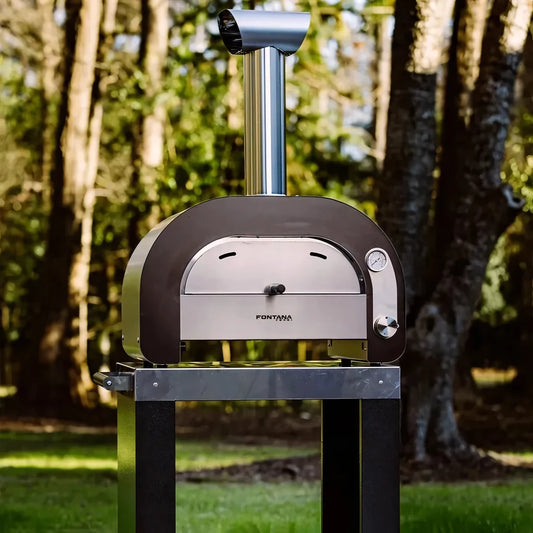
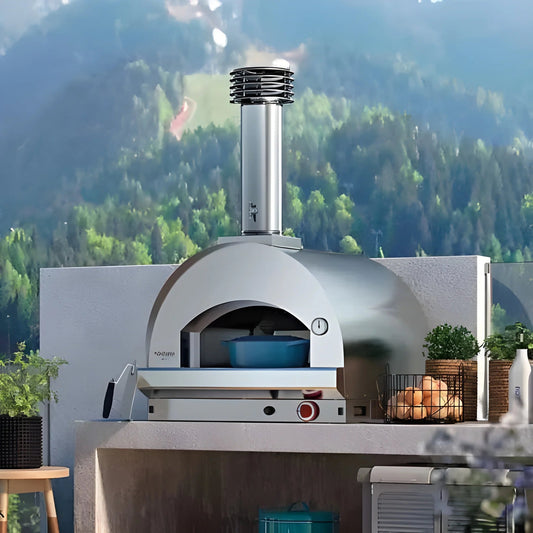
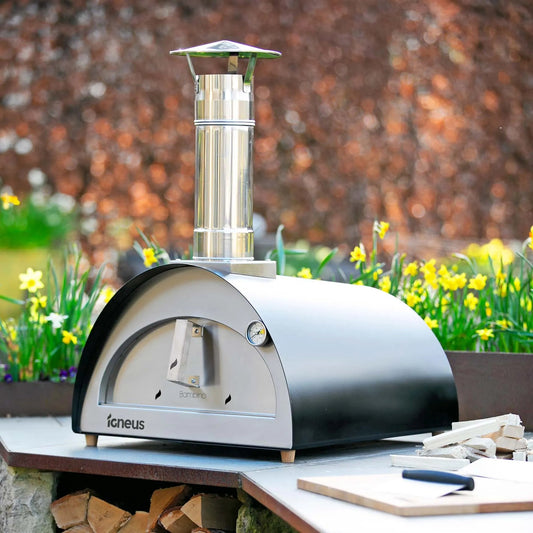
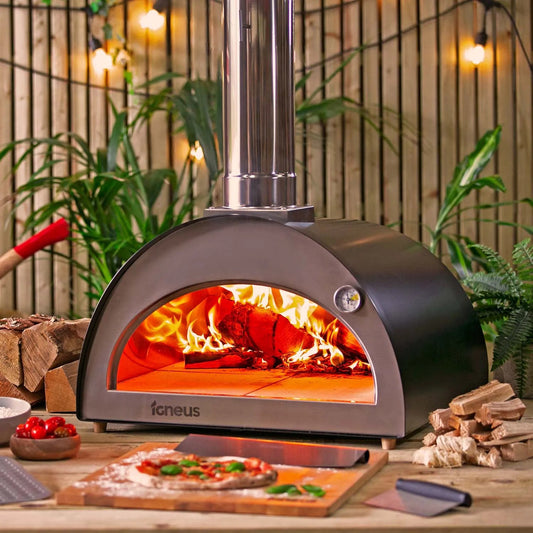
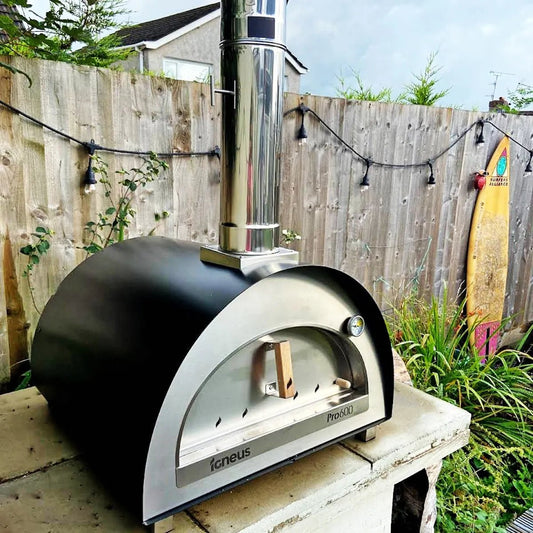
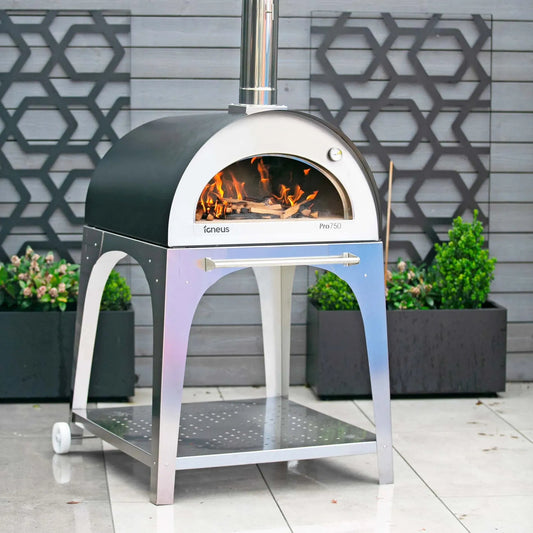
A countertop pizza oven can bring pizza cooking to a suitable stand or work surface without choosing a fully built-in format. Start with the approved location and support requirements, then compare fuel, usable cooking space and the features you will use. Countertop describes how the oven is supported, not a guarantee that it is lightweight, portable or suitable for indoor use.
Choose the supporting surface before the position
Check the appliance’s weight, footprint and requirements for a stable, level and heat-suitable surface. An ordinary garden table or an outdoor kitchen worktop is not automatically suitable. Allow for the full appliance, including feet, door movement and any flue, and follow any requirements for the material underneath it.
Keep the specified clearances beside, behind and above the oven. Nearby walls, fences, shelving and overhead structures affect the location even when the oven fits on the worktop. Do not enclose a countertop oven in cabinetry or place it under a roof unless the exact installation arrangement is permitted.
Check weight, lifting and storage
Compare the oven’s weight and lifting instructions with the route to its cooking position. Some countertop ovens are practical to store between sessions; others need a more permanent supporting setup or lifting assistance. A freestanding description does not mean that one person can carry the oven.
Move an oven only when cool and disconnected as instructed. Plan where it will be stored and how any flue, stone or other components should be handled. A fitted cover does not replace requirements for dry storage or weather protection.
Match the fuel to your setup
Gas ovens offer adjustable burner control, but you must confirm the specified gas type, operating pressure, regulator, hose and cylinder connection. Check which components are supplied and where the cylinder can be positioned. Do not assume every LPG oven uses the same connection or can be converted to natural gas.
Wood-fired ovens involve tending a fire and handling ash. Follow the approved fuel specification, log dimensions and firing process, and leave room for dry fuel storage outside the required clearances. Use only clean, dry, untreated fuel suitable for cooking.
Electric models need the specified electrical supply and an approved location. Electric does not automatically mean indoor-safe or suitable for any balcony or sheltered area. Check indoor or outdoor approval and any restrictions on extensions, adaptors and exposure to weather.
For dual-fuel models, confirm the exact supported fuels, equipment supplied and changeover procedure. Follow any shutdown, cooling or component-changing requirements. Never assume switching is immediate or that two fuels can be used simultaneously.
Compare cooking space and the opening
Check usable floor dimensions and the opening rather than matching an inch label to a household size. A larger pizza diameter can give more working room, but it does not automatically mean the oven cooks several pizzas at once. In direct-fired designs, the fire also takes up chamber space.
Think about the pizzas you make and how you serve them. One pizza at a time can work well for a group if you are comfortable cooking in succession. Check room to launch, turn and remove each pizza, and match the peel to the opening and floor dimensions.
Rotating stones and other features
A rotating cooking stone can reduce the need for manual turning where the model is designed for it, but you still need to monitor the pizza and follow the loading instructions. Check how the rotation is powered, controlled and cleaned, and whether there are restrictions on pizza size or cookware.
Compare controls, thermometers and any multifunction accessories on the exact model. Separate heating controls or additional cooking modes are not universal features. A pizza accessory for a multifunction appliance should be used only in its approved configuration, with the required components and clearances.
Preheat the floor and allow recovery
Follow the recommended preheating process rather than assuming all compact ovens heat in the same time. A chamber thermometer or display does not necessarily measure the surface beneath the pizza. Where recommended, a suitable infrared thermometer can help assess the cooking floor.
Allow the floor to recover between bakes when needed. Dough thickness, topping load, positioning and heat balance affect the result, so watch both the base and toppings. Adjustable controls or a rotating stone do not guarantee even cooking without appropriate preparation and technique.
Make room for preparation and care
Leave working space to stretch dough, top pizzas and load the peel without crowding the hot appliance. Check whether a stand, peel, cover or tools are included before buying extras, and choose accessories by confirmed compatibility rather than appearance or brand alone.
Other dishes depend on chamber height, temperature range and approved cookware. Follow the oven instructions for cooking, shutdown, cooling and cleaning. Do not immerse a stone or use cleaning products unless permitted, and remove food residue using the prescribed method.
Compare gas, wood-fired and electric pizza ovens within the full pizza oven range. Choose the approved location and fuel first, then the capacity and features that fit your cooking routine.