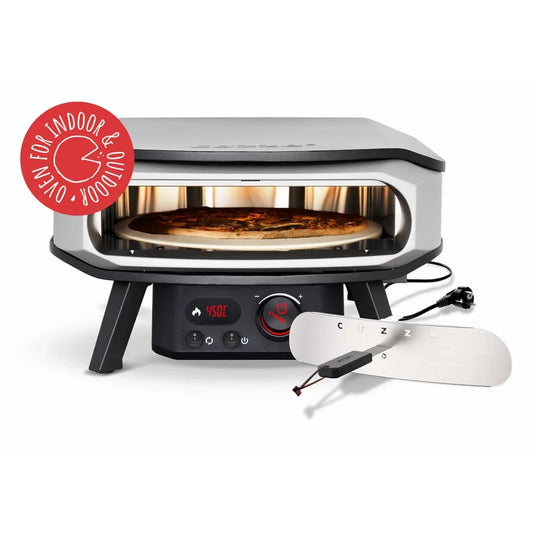
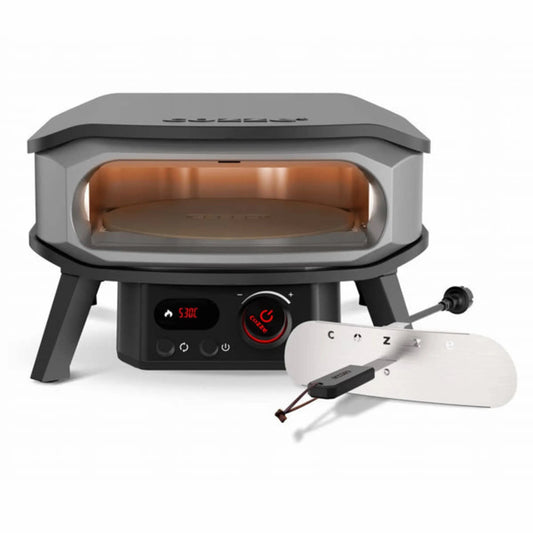
Choosing an electric pizza oven
An electric pizza oven offers pizza cooking without tending a wood fire or connecting a gas cylinder. Compare the exact model’s permitted location, electrical requirements and usable cooking space before focusing on its maximum temperature. The most practical choice is one that fits your setup and the way you prepare and serve pizzas.
Check where the model can be used
Electric does not automatically mean suitable for indoor cooking. Use an oven indoors only when its manufacturer explicitly approves that use. An outdoor model must be used in the outdoor setting described in its instructions, with the specified ventilation and clearances. A kitchen, garden room, balcony or covered terrace is not automatically an approved location.
Check the space above, behind and beside the oven, as well as the surface supporting it. Allow room to operate the door, load a peel and handle hot food. Follow any restrictions on overhead structures and nearby materials rather than assuming a compact appliance needs little clearance.
Plan the electrical supply before ordering
Confirm the rated voltage, power demand, plug arrangement and supply requirements for the exact oven. Check whether your proposed outlet and circuit meet those requirements. For outdoor use, the electrical arrangement, protective devices and exposure protection must follow the appliance instructions and be suitable for the location; seek qualified electrical advice where necessary.
Do not assume an extension lead, adaptor or shared socket is suitable for a high-power cooking appliance. Use these only where permitted and appropriately rated. Position cables away from hot surfaces, water and walkways, and follow the instructions for switching off and disconnecting after use.
Compare floor size and working room
Look at the cooking-floor dimensions and opening as well as the quoted pizza diameter. Leave room to launch, turn and remove the pizza comfortably. Match the peel to both the food size and the oven opening, and check that you have preparation space beside the appliance.
For several people, consider the rhythm of cooking one pizza after another. The floor may need recovery time between bakes, even when the oven’s temperature display has returned to its setting. A larger exterior or higher power figure alone does not establish greater usable capacity or better cooking results.
Preheat the floor as well as the chamber
Follow the model’s preheating instructions and any first-use preparation. Readiness varies with the oven, target temperature and starting conditions, so do not apply one preheating time to the whole category. The temperature display or thermostat reading is not necessarily the temperature at the point where the pizza base cooks.
Where recommended, a suitable infrared thermometer can help check the cooking surface. Select cooking conditions around your dough and pizza style. If the model has separate heating controls, use them according to its instructions rather than assuming every electric oven has independently adjustable upper and lower elements.
Balance the base and toppings
Watch the pizza during cooking and turn or reposition it where required. If toppings brown before the base cooks, review the floor preheat, dough thickness and topping load. If the base scorches, review the surface temperature and excess launching flour. Adjustable controls help manage heat, but they do not remove the need to learn the oven’s behaviour.
Electric heating avoids a wood fire, but food, grease and flour can still scorch or produce smoke. Keep within the approved cooking methods, clean deposits as instructed and do not treat the oven as smoke-free. Cooking times depend on the recipe and conditions rather than a single promise for every pizza.
Check accessories and other cooking uses
Confirm whether a peel, stand, cover or other accessories are included with the exact model. Select replacements and optional extras by confirmed compatibility and dimensions, not appearance alone. A stand must support the appliance securely and meet its installation requirements.
Flatbreads, calzones or other dishes may be possible where the oven instructions allow them, but chamber height, temperature range and cookware limits vary. Only use cookware approved for the intended heat and method, leaving enough space to insert and remove it safely. Do not assume a pizza oven can replace every function of a domestic oven.
Cleaning, cooling and storage
Switch off, disconnect and allow the oven to cool as directed before cleaning or moving it. Follow the specified care for the cooking stone and heating area; do not immerse components or use cleaning products unless permitted. Regular removal of food residue is still necessary, even though there is no wood ash to clear.
Check the storage requirements before choosing a permanent position. An outdoor-use designation does not mean unrestricted exposure to rain or all-weather storage. Use an appropriate cover only after cooling and do not let a cover replace any requirement for dry storage.
Compare the full pizza oven range if you are still choosing between electric, gas and wood-fired cooking. Start with the fuel and location that suit your home, then compare the capacity and features of individual models.