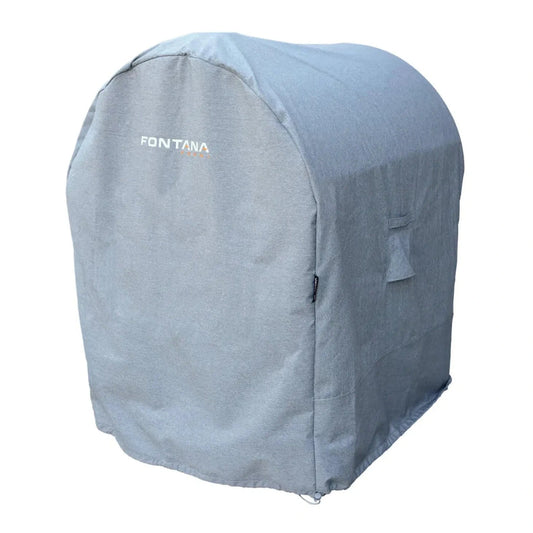
Choosing a cover for your pizza oven
Choose a pizza oven cover around the exact appliance and the way it is stored. Fit, fastening and the protection specified for the fabric matter more than a general weatherproof label. A cover can form part of the oven’s care routine, but it does not replace the manufacturer’s requirements for location, moisture protection or dry storage.
Start with the exact model and configuration
Check the cover’s listed compatible models, including the oven size and version. A cover from the same brand is not automatically suitable for every oven in its range. Similar-looking appliances can differ in door shape, flue position and overall dimensions.
Confirm whether the cover is for the oven alone, an oven on a particular stand or a complete cooking station. Shelves, handles and other projections can change the shape it needs to fit. Do not assume an oven-only cover also protects the stand or equipment stored below it.
Measure universal covers carefully
For a cover not explicitly matched to your model, compare the stated cover dimensions with the full width, depth and height of the configuration it is intended to cover. Check the measurement guidance rather than using the cooking-floor size or a model name as the exterior dimensions.
Allow for the fit described by the cover manufacturer without choosing excessive loose fabric. Check that the hem and fastenings can be used as intended and that the cover will not be pulled tight over protruding parts. Universal means that dimensions must be checked, not that the product fits every oven.
Check what happens to the flue and accessories
Some cover arrangements require a flue or other components to be removed; others are designed around an assembled appliance. Follow both the oven and cover instructions, and do not force fabric over parts it was not designed to accommodate.
Remove components only when cool and as instructed, and store them appropriately. Do not alter the appliance or cover to make an unsuitable combination fit. Check how doors, shelves and detachable accessories should be positioned before fastening the cover.
Understand the stated weather protection
Compare the cover’s documented material properties, seams and intended storage use. Water resistance, waterproof construction and UV resistance are different claims; do not assume that every cover provides all three. Follow any exposure limits and maintenance requirements stated for the exact product.
A cover does not make an oven frost-proof or establish that it can remain outdoors throughout winter. The appliance’s instructions determine whether covered outdoor storage is suitable or whether additional shelter or dry storage is required. The same applies to electrical components, stones and accessories.
Cool the appliance before covering
Shut down the oven according to its fuel-specific instructions and allow it to cool fully before fitting a fabric cover. Check the flue and other components as well as the main body. Do not rely on the absence of visible flames or a cool-looking exterior to judge readiness.
For solid-fuel appliances, follow the instructions for embers and ash, which can retain heat after a session. Never use a storage cover to extinguish a fire or protect an operating oven from rain. Remove the cover completely before lighting or powering the appliance.
Check for moisture rather than covering and forgetting
Follow the prescribed routine for fitting, fastening and checking the cover. Inspect the appliance and cover periodically for dampness, trapped debris, standing water or damage, especially after adverse weather. Keep any ventilation features clear and use them as designed.
If moisture has reached the oven, follow its drying or recommissioning instructions before cooking. A dry-looking cover does not establish that the cooking floor or insulation beneath it is ready to heat. Do not use a large fire to dry an oven unless that is part of the manufacturer’s prescribed process.
Care for the cover itself
Clean the fabric using the stated method and avoid detergents, solvents or machine washing unless permitted. Let the cover dry as directed before folding it for storage. Inspect seams, straps and fabric for wear, and replace a damaged cover where it no longer performs as intended.
Use fastenings without overstretching the fabric and keep the cover away from hot tools or sharp edges. A well-matched cover is useful only when it is fitted and maintained correctly; it is not a guarantee against corrosion, moisture damage or every weather condition.
For the rest of your setup, browse all pizza oven accessories. Choose each item by the requirements of the exact oven rather than assuming one accessory suits the whole range.