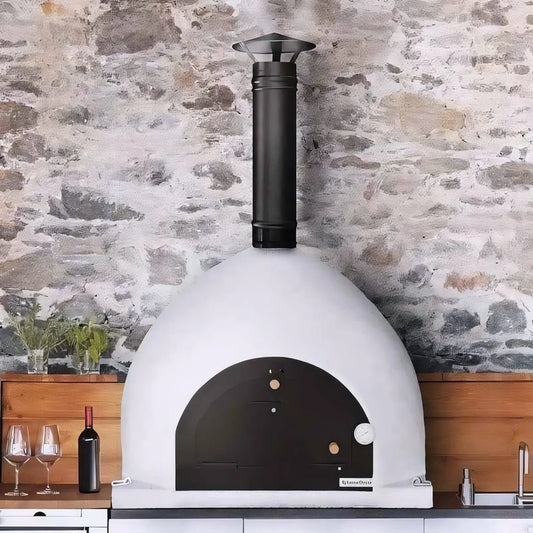
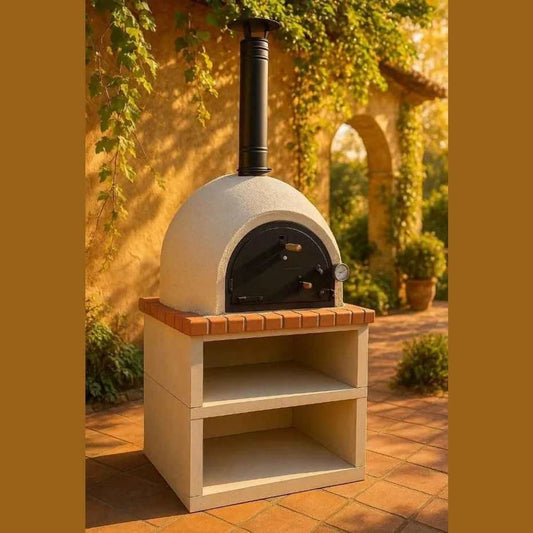
Choosing a masonry pizza oven for your garden
A masonry pizza oven brings brick or refractory construction into an outdoor cooking space. Choose around usable cooking capacity, installation needs and the way you like to cook, rather than appearance alone. Compare the exact model’s construction and instructions: a traditional shape or a larger exterior does not by itself establish how quickly the oven heats or how long it stays ready for cooking.
Model size is not the same as cooking-floor size
An 80 cm or 100 cm label may describe the oven’s exterior or base rather than the clear cooking space inside. Check the internal floor dimensions and door opening before comparing capacity or buying a peel. In direct-fired designs, allow room for the fire as well as the pizza.
Consider how easily you can launch, turn and remove food. A stated pizza capacity does not tell you how much working room remains between pizzas and the fire. For family meals or entertaining, choose the space you can use comfortably rather than assuming the largest model is necessary.
Oven only, stand package or complete outdoor kitchen
Compare what each product actually includes. An oven-only model needs a suitable supporting structure, while a package may include a matching stand or side table. A complete outdoor kitchen with a separate BBQ adds another appliance and its own operating and clearance requirements.
A mobile or movable description does not make a heavy masonry oven suitable for frequent transport. Check the weight, supporting surface and approved moving procedure. Only reposition an appliance when cool and in accordance with its instructions, using the assistance or equipment required.
Plan the base and delivery route first
Check the oven’s weight and requirements for a level, stable, load-bearing support. The base must suit the exact appliance and any supplied supporting components. Where a new foundation or raised structure is needed, obtain appropriate professional advice rather than relying on footprint alone.
Confirm delivery arrangements, access widths, ground conditions and how the oven will reach its final position. Pallet or kerbside delivery does not automatically include lifting it onto a base. Steps, narrow gates and uneven ground may require additional planning or equipment; resolve these details before ordering or building the surrounding structure.
Position the oven around its installation requirements
Follow the specified clearances from combustible materials, walls and overhead structures, including those around the door and flue. Masonry construction does not mean that the outside of an oven can be treated as cool or that nearby materials need no protection.
Confirm the supplied flue components and approved installation arrangement. Do not assume a chimney can be extended, redirected or enclosed without further guidance. Use outdoor ovens outdoors, and do not install beneath a roof or within an enclosure unless the exact arrangement is approved by the manufacturer. Leave room for preparation, peel movement, cleaning and maintenance.
Curing and routine preheating are different
Check whether the oven requires curing, drying or a staged first firing before normal use. Follow the supplied sequence and fuel quantities rather than starting immediately with a large fire. Any recommissioning procedure after storage or damp conditions must also follow the manufacturer’s guidance.
Routine preheating depends on the model, its starting conditions, fuel and intended cooking temperature. Do not assume every masonry oven needs the same time or that it will always heat more slowly than a metal oven. The cooking floor needs to be ready as well as the chamber; a thermometer at one point does not establish the temperature everywhere inside.
Manage the fire around the food
Use only the fuel type and log sizes approved for the oven. For wood-fired models, choose clean, dry, untreated fuel suitable for cooking; do not burn painted or treated timber or manufactured wood products. Keep stored fuel outside the required heat clearances.
Follow the recommended fire position and maintain enough room to turn pizzas. Allow the floor to recover between bakes where necessary. Cooking time depends on the dough, toppings, heat balance and oven behaviour, so watch the food rather than relying on a universal time promise.
Retained heat and cooking beyond pizza
Refractory materials store heat, but useful cooking time depends on the whole oven design, insulation and firing process. Do not assume every masonry model will maintain cooking conditions for hours or outperform every metal oven. Compare the manufacturer’s intended cooking methods for the exact appliance.
Bread, roasting and slow-cooking recipes need appropriate temperatures, cookware and food handling. Use these methods only where supported by the oven instructions, and check that dishes fit through the opening with enough space to handle them safely. Residual warmth alone is not proof that an oven is maintaining the conditions a recipe needs.
Moisture protection, cooling and care
Check the weather-protection and storage requirements before choosing a permanent position. A fitted cover is not a universal guarantee of year-round protection, and outdoor construction does not remove the need for the prescribed care. Keep the oven dry as directed and follow any instructions for use after wet or cold periods.
Allow the oven and embers to cool as instructed before ash removal, cleaning or covering. Ash can retain heat after the fire appears out. Use only approved cleaning methods and do not apply water to a hot cooking floor or immerse refractory components. Inspect and maintain the oven according to its care guide rather than treating cracks, moisture or surface wear with unapproved products.
Planning a permanent installation? Compare built-in pizza ovens or browse the full pizza oven range to weigh up other formats. Let the approved installation and care requirements guide the choice as much as the style of the oven.